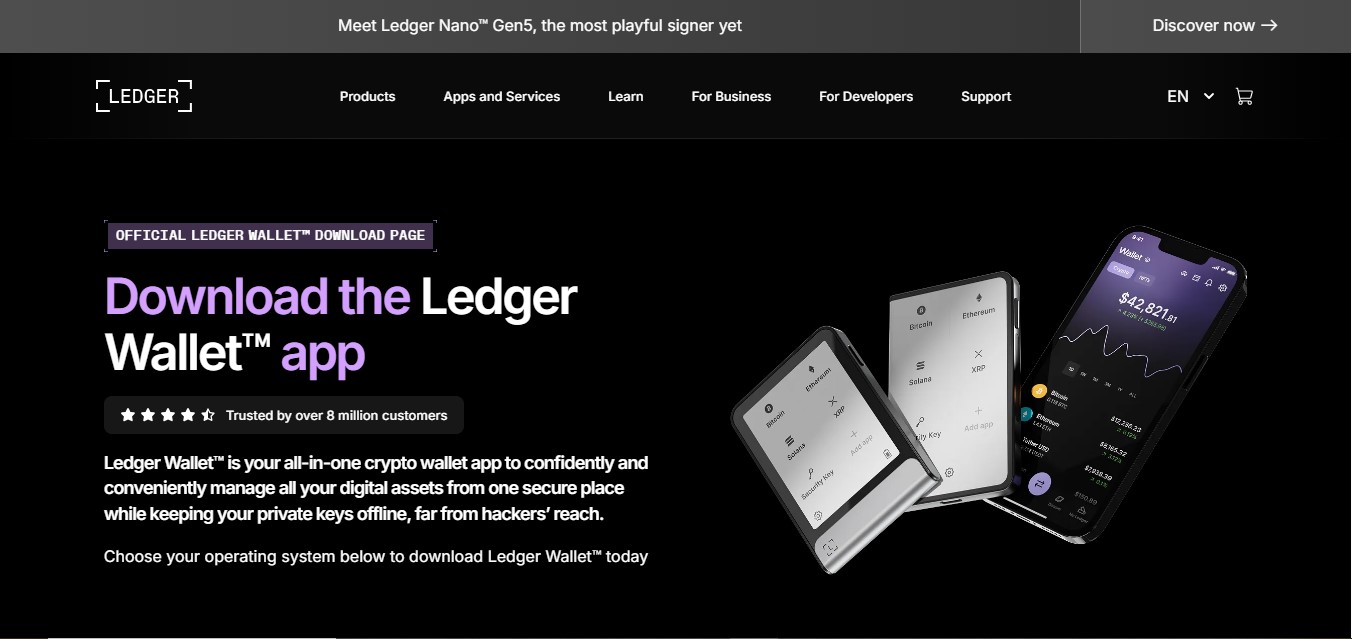
Ledger Live Desktop – Trusted Crypto Wallet Interface
In the rapidly evolving world of cryptocurrencies, security and usability are paramount. For millions of crypto investors and enthusiasts, managing digital assets securely without sacrificing convenience is critical. Ledger Live Desktop has emerged as one of the most trusted interfaces for securing and managing crypto portfolios through Ledger hardware wallets. This guide explains what Ledger Live Desktop is, how it works, its key features, security model, and best practices for using it safely.
What Is Ledger Live Desktop?
Ledger Live Desktop is a desktop application that provides a secure and intuitive interface for interacting with your Ledger hardware wallet — such as the Ledger Nano S Plus, Ledger Nano X, and Ledger Stax. It runs on major operating systems including Windows, macOS, and Linux. Ledger Live acts as a bridge between your computer and your hardware wallet, allowing you to manage assets, execute transactions, track performance, interact with DeFi protocols, and more — without exposing your private keys to your computer or the Internet.
The key principle behind Ledger Live Desktop is self‑custody — meaning you retain full control of your private keys, and Ledger Live simply facilitates safe interaction with blockchain networks. Its design ensures that private keys never leave your hardware wallet’s secure element chip, preventing unauthorized access even if your computer is compromised.
Why It’s Trusted in the Crypto Space
Ledger Live Desktop enjoys a solid reputation in the cryptocurrency ecosystem for several reasons:
1. Hardware‑Backed Security
The core security model separates transaction preparation from transaction signing. Ledger Live builds unsigned transactions and sends them to your physical hardware wallet. You must confirm each transaction on the device screen, and only then is the transaction signed using private keys stored in the secure element. This ensures that even if your computer were infected with malware, attackers cannot sign transactions without physical access to your device.
2. Industry Standards & Audits
Ledger’s software components, including parts of Ledger Live, are open source and regularly audited by external security researchers. This transparency helps build trust because independent experts can verify that there are no hidden vulnerabilities or backdoors.
3. No Custodial Risk
Unlike centralized exchanges or custodial wallets where your private keys are controlled by a third party, Ledger Live Desktop paired with a Ledger device ensures non‑custodial ownership. You are your own bank — only you control your private keys.
How Ledger Live Desktop Works
1. Installation & Setup
To get started with Ledger Live Desktop:
Download the app from the official Ledger website to ensure authenticity.
Install it on your computer and launch the interface.
Connect your Ledger hardware wallet via USB (or Bluetooth if supported).
Initialize your device with a secure PIN and generate a unique 24‑word recovery phrase if it’s new. Ledger Live will never request your recovery phrase — it’s stored on the hardware device only.
The recovery phrase is the ultimate key to your funds. Store it offline in a secure location, and never enter it into any software or website — Ledger Live will never ask for it.
Key Features of Ledger Live Desktop
Ledger Live Desktop combines a suite of robust features tailored to both novice and experienced crypto users:
1. Portfolio Management
Ledger Live Desktop provides a real‑time portfolio dashboard, showing your total crypto holdings, individual asset balances, and performance charts over time. Users can view asset allocation and historical data in a clean, organized interface.
2. Multi‑Asset Support
The app supports thousands of cryptocurrencies, including Bitcoin (BTC), Ethereum (ETH), and thousands of ERC‑20 and other tokens. You can add different accounts, view their balances, and organize your portfolios efficiently.
3. Secure Transactions
Sending and receiving crypto is straightforward:
Initiate the action in Ledger Live Desktop.
Review transaction details on the computer screen.
Confirm the transaction on your Ledger device to sign it.
This process protects against remote hacking attempts since signing always requires physical confirmation on the hardware wallet.
4. Buy, Sell & Swap
Ledger Live integrates trusted third‑party services that allow users to buy, sell, or swap crypto directly within the app. These integrations provide convenience while still requiring device confirmation for signing all transactions.
5. Staking & Rewards
Users can stake supported assets like ETH, DOT, XTZ, and others to earn passive rewards without transferring funds to external platforms. This staking functionality is incorporated natively within Ledger Live.
6. NFT Management & Web3 Access
Ledger Live now lets users view their NFT collections (e.g., on Ethereum and Polygon) and interact with decentralized applications (dApps) via secure integrations. This means you can explore Web3 functionality directly in a trusted environment without exposing your keys.
7. Manager & Firmware Updates
The Manager in Ledger Live Desktop allows you to install or uninstall blockchain apps on your Ledger device and update its firmware. Firmware updates include security patches and support for new assets, so keeping both the device and app updated is crucial.
Security Model & Best Practices
Security is at the heart of Ledger Live Desktop, but users must also adopt strong habits to maintain it:
1. Keep Private Keys Offline
The most important security guarantee is that private keys never leave the secure hardware element of your Ledger device. Ledger Live only composes, prepares, and broadcasts transactions — all signing happens inside the device.
2. Verify Transaction Details on Device
Always verify transaction details on the hardware wallet’s screen before approving. This prevents attacks where malware attempts to manipulate transaction data on the computer.
3. Avoid Phishing and Fake Apps
Scammers often create fake versions of Ledger Live or phishing websites that mimic the official one. These can attempt to capture your seed phrase or install malware if downloaded from unofficial sources. Always download Ledger Live from the official Ledger site and verify the authenticity of URLs before installing.
4. Protect Recovery Phrase & PIN
Store your 24‑word recovery phrase securely offline, and never share it. Your PIN also serves as protection if someone gains temporary access to your Ledger device. Never enter recovery phrases into any digital setup or form.
Limitations & Considerations
While Ledger Live Desktop is powerful, there are a few considerations:
Requires a hardware wallet: Ledger Live Desktop is designed to work with Ledger devices only; without one, you cannot access your crypto assets.
Third‑party fees: Buy, sell, and swap functions integrate partners that may charge fees.
Needs careful handling: Security depends heavily on users following recommended best practices.
Conclusion
Ledger Live Desktop has earned its place as a trusted crypto wallet interface by combining robust security, rich features, and user‑friendly design. When paired with a Ledger hardware wallet, it empowers users to manage diverse crypto assets, execute secure transactions, and explore Web3 features — all while maintaining full control over private keys. Whether you’re a long‑term holder or an active DeFi participant, Ledger Live Desktop offers a comprehensive, secure, and reliable solution for crypto portfolio management.