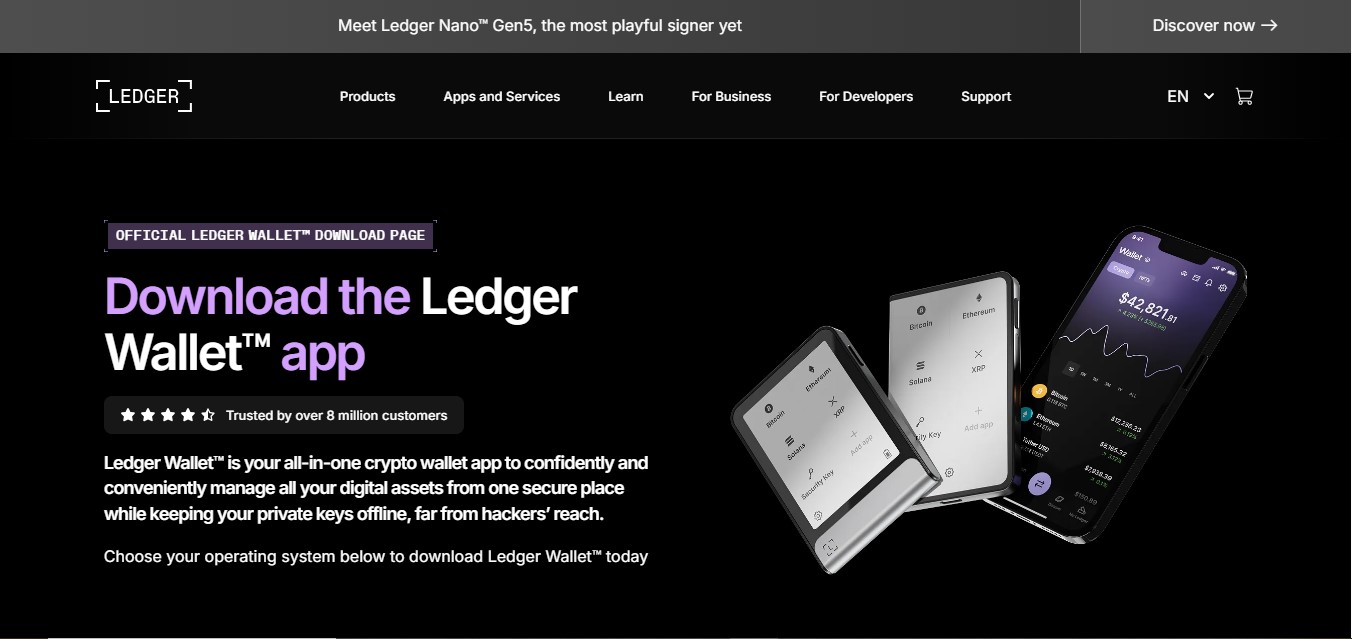
Download Ledger Live Desktop – Hardware Wallet Interface (Comprehensive Guide)
Introduction
Ledger Live Desktop is the official desktop interface for managing Ledger hardware wallets — such as Ledger Nano X, Ledger Nano S Plus, and Ledger Stax — on computers running Windows, macOS, or Linux. It acts as a bridge between your computer and your cold storage device, enabling you to view portfolios, send and receive crypto, install or update blockchain apps, stake assets, and interact with DeFi applications — all while your private keys remain securely stored offline inside the hardware wallet.
Ledger Live Desktop should only be downloaded from the official Ledger website (e.g., ledger.com/ledger-live or ledger.com/start). This document explains what it is, how to download and install it, key features, security practices, and full usage guidance.
1. What Is Ledger Live Desktop?
Ledger Live Desktop is a secure application designed for people who own a Ledger hardware wallet. Its purpose is to let users manage their cryptocurrency portfolios and perform a wide variety of tasks without exposing sensitive information to vulnerable online systems.
Here’s what Ledger Live Desktop delivers:
Secure hardware wallet integration — Transactions are always signed on the Ledger device, keeping your private keys offline.
Portfolio overview — Track real‑time balances and performance across all your crypto accounts.
Account and asset management — Add, remove, or organize multiple blockchain accounts in one place.
Buy, sell, and swap crypto using trusted integrations.
Staking and passive rewards — Delegate assets like Ethereum or Tezos for earning yields.
NFT and DeFi access — View and interact with supported decentralized applications and digital collectibles.
Device management — Install and uninstall blockchain apps on your Ledger device and update firmware.
In short, Ledger Live Desktop provides centralized visibility and control over your crypto ecosystem — without compromising the hardware wallet’s offline key security.
2. Why Use Ledger Live Desktop Instead of Other Wallets?
Unlike exchange‑based wallets or software‑only wallets:
Your private keys never leave the Ledger device, protecting them from malware or online attacks.
You sign every transaction manually on the device. This means that even if your computer is compromised, your crypto stays safe.
Ledger Live Desktop supports thousands of assets across many blockchains, giving you broad visibility and control.
This hardware‑backed model — sometimes called cold storage plus desktop UI — is widely considered one of the strongest security setups for personal cryptocurrency management.
⚠️ Never enter your 24‑word recovery phrase into any app or website, including Ledger Live Desktop. Ledger will never ask for it outside the hardware device itself.
3. System Requirements
Before installing Ledger Live Desktop, make sure your computer meets the minimum requirements.
Supported Operating Systems:
Windows — Windows 10 or higher (64‑bit).
macOS — macOS 12 (Monterey) or newer.
Linux — Modern distributions like Ubuntu 20.04 or later.
You also need:
A USB port for connecting your Ledger device.
Internet access for blockchain sync and software updates.
Your Ledger hardware wallet and USB/Bluetooth connection as applicable.
4. How to Download Ledger Live Desktop (Step‑by‑Step)
Step 1 — Visit the Official Download Page
Go directly to the official Ledger download section:
👉 https://www.ledger.com/ledger-live or https://www.ledger.com/start
⚠️ Important: Do not download from third‑party sites, search engine ads, or unofficial links — these can contain malware or fake applications designed to steal seed phrases.
Step 2 — Choose Your Operating System
Select the version that matches your computer: Windows, macOS, or Linux.
Step 3 — Download the Installer
Click “Download” and save the setup file to your computer.
Step 4 — Install the Application
On Windows: Run the
.exefile and follow the installation wizard.On macOS: Open the downloaded
.dmgfile and drag the Ledger Live icon into your Applications folder.On Linux: Use the appropriate AppImage or package and set execute permissions before running.
Step 5 — Launch Ledger Live Desktop
Open the app and let it complete its initial setup.
5. First‑Time Setup & Connecting Your Ledger Hardware Wallet
Once Ledger Live Desktop is installed:
Plug in your Ledger device with a USB cable or Bluetooth (supported on some devices like Ledger Nano X).
Unlock the device — enter your PIN directly on the hardware device.
Select “Get Started” in Ledger Live Desktop.
Choose whether to set up a new device or restore using your recovery phrase (only done on the device itself).
Follow on‑screen instructions to add crypto accounts.
At no point should you enter your seed phrase into your computer — it’s accepted only on the Ledger device.
6. Navigating the Ledger Live Desktop Interface
Once connected, the Ledger Live Desktop UI provides several key components:
Portfolio Dashboard
Shows your total holdings, individual account balances, and performance charts.
Accounts Tab
Add and manage accounts for different cryptocurrencies (e.g., Bitcoin, Ethereum, Solana).
Manager
Install or remove blockchain apps on your Ledger device and perform firmware updates.
Buy / Sell / Swap
Integrated third‑party services let you trade crypto without leaving the app.
Staking
Delegate assets to earn passive rewards.
NFT Manager & DeFi Portal
View NFTs and interact with supported decentralized applications.
7. Security Best Practices
Ledger Live Desktop provides strong security, but you should also follow these rules:
Always download software from the official Ledger site.
Downloading from unsafe sites can lead to fake apps that phish seed phrases or compromise security.
Never share your 24‑word recovery phrase.
It should only be used on the Ledger device itself, never in software or emails.
Verify transactions on your Ledger device.
Every crypto transfer must be confirmed on‑device to sign the transaction securely.
Keep firmware and Ledger Live updated.
Updates include important security enhancements.
8. Common Troubleshooting Tips
Here are typical issues users face and how to address them:
Device not detected: Make sure the USB cable and connection are secure. Try a different USB port.
Ledger Live won’t start: Reinstall from the official site.
Signals a fake software: If Ledger Live ever requests your recovery phrase or redirects to unknown sites — close it immediately; it’s likely a scam.
Firmware update issues: Ledger Live will prompt you; follow the on‑screen flow and approve actions on your device screen.
Conclusion
Ledger Live Desktop is the central hub for managing your Ledger hardware wallet on your desktop computer. It combines security, usability, and powerful features — all while keeping your private keys offline and protected. By following official download steps, sticking to best security hygiene, and learning the interface, you can confidently handle your crypto portfolio with maximum protection.